
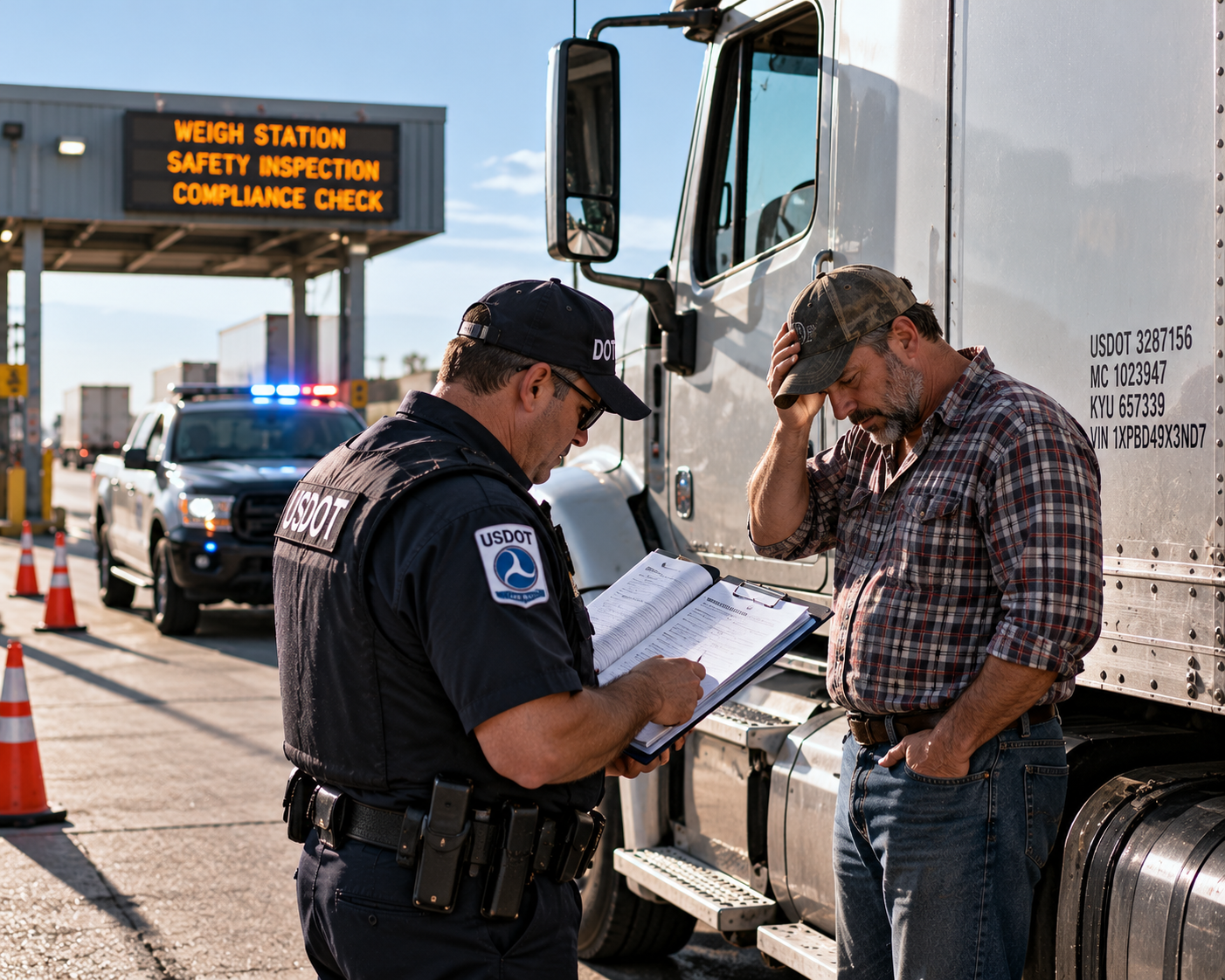
Transportation companies face a complex and expanding web of regulatory requirements — from FMCSA hours-of-service rules and CSA scoring to drug and alcohol testing, vehicle maintenance standards, and ELD mandates. Non-compliance doesn’t just generate fines and penalties; it dramatically increases liability exposure when accidents occur, making regulatory performance one of the most direct drivers of insurance cost in the industry. Carriers that manage compliance well are rewarded in a captive by keeping the underwriting profit that commercial carriers would otherwise collect.
Why Regulatory Compliance Is an Insurance Issue, Not Just an Operations Issue
The Federal Motor Carrier Safety Administration (FMCSA) sets the compliance framework for most motor carriers. CSA — Compliance, Safety, Accountability — scores track a carrier’s performance across categories including unsafe driving, hours-of-service compliance, vehicle maintenance, and driver fitness. A carrier with poor CSA scores is not only more likely to have an accident; they are significantly more vulnerable to large verdicts when accidents do occur. Plaintiffs’ attorneys use documented compliance failures — expired driver qualifications, hours-of-service violations, deferred maintenance — to argue systemic negligence, transforming routine accidents into nuclear verdicts.
The connection between compliance and insurance cost is direct and measurable. Commercial insurers price heavily on CSA scores, loss history, and compliance culture. Carriers with strong safety programs are routinely priced alongside those with weaker records in the commercial pool — effectively subsidizing the risk they didn’t create. A captive breaks that dynamic. When a carrier’s own compliance discipline keeps losses low, the underwriting profit stays with the operator rather than being shared across a pool of less disciplined competitors.
Every transportation company is already self-insuring a portion of its compliance-related costs — fines, legal defense below deductible thresholds, administrative burden, and settlements that never reach the commercial policy. A captive formalizes all of that retained risk in a legitimate, licensed insurance company with actuary-priced policies. Critically, it also creates a direct financial incentive for compliance: when the operator absorbs a defined layer of their own losses, the cost of a preventable violation is felt immediately rather than diluted through a commercial pool. The correlate is equally true. When a carrier limits losses through strong compliance, that financial benefit is also felt directly — it is not diluted across a pool of other carriers. In a commercial program, a compliant carrier’s good performance gets averaged in with everyone else’s. In a captive, the operator captures that benefit entirely.
Key Points
• Key regulatory requirements: FMCSA rules covering hours of service, ELD compliance, driver qualification files, drug and alcohol testing, vehicle maintenance standards, and hazmat regulations where applicable.
• CSA scores and liability: Poor CSA scores increase both accident probability and verdict severity. Plaintiffs’ attorneys specifically use compliance failures to establish negligence, turning accidents into nuclear verdicts that dwarf what a compliant carrier would face for the same incident.
• The compliance-insurance connection: Commercial insurers price on CSA scores and compliance history. Strong carriers subsidize weaker operators in the commercial pool. A captive prices risk on the carrier’s own experience and rewards compliance directly.
• How a captive helps: A captive prices risk on the carrier’s own loss experience, creates a direct financial incentive to prevent violations, and builds a genuine financial asset rather than transferring wealth to a commercial carrier year after year.
• The asset dimension: Underwriting profit when losses stay below premiums, investment income earned on reserves, and compounding equity all belong to the operator — not the commercial carrier.
What is a CSA score and how does it affect insurance?
A CSA score measures a motor carrier’s safety performance across seven categories tracked by the FMCSA, including unsafe driving, hours-of-service compliance, and vehicle maintenance. Higher scores indicate more violations and greater risk. Commercial insurers use CSA data in underwriting, and plaintiffs’ attorneys use it to establish negligence in accident litigation — making poor scores a direct driver of both premium cost and liability exposure.
What is the connection between regulatory violations and nuclear verdicts?
When a serious accident involves a carrier with documented compliance failures — expired driver qualifications, hours-of-service violations, deferred maintenance — plaintiffs’ attorneys use those records to argue systemic negligence, dramatically increasing jury awards. Nuclear verdicts in trucking frequently center on compliance failures as a core element of the claim, turning what might otherwise be a modest settlement into a multimillion-dollar judgment.
How do ELD requirements affect compliance risk?
Electronic Logging Devices automatically record hours-of-service data, eliminating the manipulation possible with paper logs. While ELDs improve compliance, they also create an unambiguous record that can be used in litigation. Carriers with ELD data showing violations have limited ability to contest hours-of-service claims in court — making actual compliance, not just recordkeeping, the only real protection.
Can a captive cover costs arising from regulatory compliance failures?
Insurance — including a captive — generally cannot cover regulatory fines and penalties directly. However, a captive can cover the legal defense costs, liability exposure, and settlements that arise when compliance failures contribute to an accident or claim. It also creates a direct financial consequence for poor compliance, since the operator absorbs a defined layer of their own losses rather than transferring them to a commercial pool.
Common Misconceptions
“Our safety program is solid — compliance isn’t a financial issue for us.”
If that’s true, a captive is exactly the right structure — because a compliant carrier with strong safety performance should be keeping the underwriting profit, not sharing it with less disciplined operators in a commercial pool. Compliance isn’t just a risk management issue; it’s a direct financial opportunity for carriers who take it seriously.
“We handle compliance risk through our deductible program.”
Deductibles capture only the first layer of formalized loss. Regulatory fines, administrative costs, legal defense below deductible thresholds, and reputational damage are all absorbed informally. A captive formalizes that entire retained risk in a legitimate, tax-advantaged, actuary-priced structure — and builds financial value from it rather than simply absorbing the cost.
“The commercial market already accounts for our good safety record.”
Commercial carriers give some credit for strong CSA scores, but they pool risk across all policyholders and keep the underwriting profit regardless. A captive prices risk entirely on the carrier’s own experience — meaning a consistently compliant, low-loss operator captures the full financial benefit of their performance rather than subsidizing the market.
Quick Summary
• Regulatory compliance in transportation is a direct financial issue — poor CSA scores and compliance failures drive both insurance costs and nuclear verdict exposure, while strong compliance programs are underrewarded in the commercial market.
• Every carrier already self-insures compliance-related costs informally — a captive formalizes that retained risk in a legitimate, actuary-priced structure and covers costs that are either unavailable or too expensive in the traditional market.
• A captive rewards compliant operators directly — by retaining their underwriting profit rather than sharing it across a commercial pool — and creates a built-in financial incentive to maintain strong safety performance.
• Reserves are invested and earn returns, underwriting profit stays with the operator, and equity compounds over time — turning a compliant, well-run operation into a growing financial asset.
3F Captive transportation companies a free analysis of regulatory and compliance risks in the industry.
Discover Tailored Insurance Solutions
Unlock the potential of customized captive insurance designed specifically for your unique business needs.