
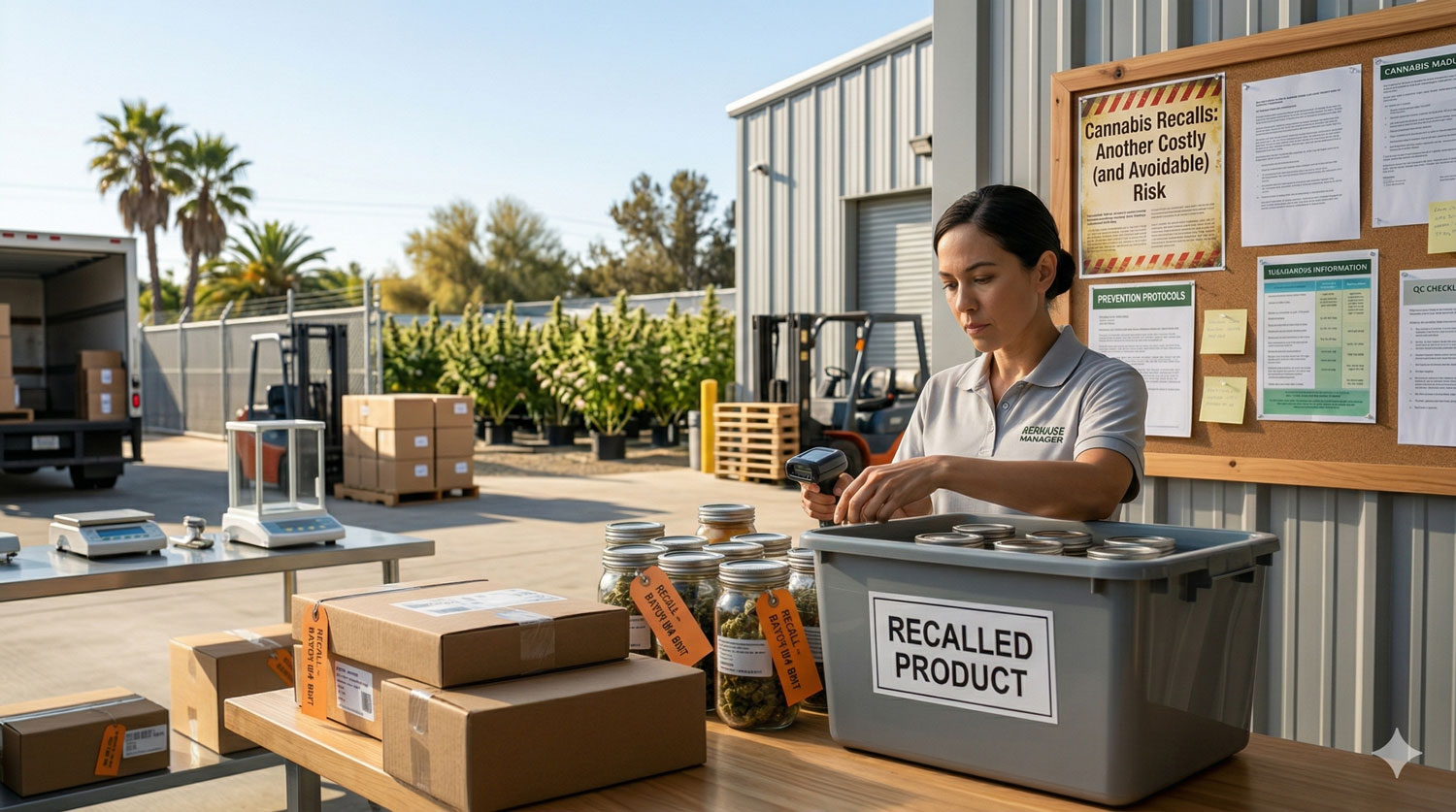
In 2023, West Coast Cure invested nearly $1 million in testing. The company used multiple state-licensed laboratories and performed thousands of compliance checks on its products before they reached consumers. Every product carried passing certificates of analysis from labs licensed and certified by the state of California. In July 2024, the state’s Department of Cannabis Control issued a mandatory recall for five of the company’s vape cartridge products across more than 200 locations in 33 counties, citing the presence of chlorfenapyr, a Category I pesticide classified by the World Health Organization as “moderately toxic” and linked by the National Institutes of Health to outcomes where “most patients with chlorfenapyr toxicity died after seven to 20 days.” Days later, a class action lawsuit was filed.
The lesson isn’t that West Coast Cure failed to take compliance seriously. By its own account, it did. The lesson is that a recall can reach even the most diligent operators. When it does, the financial consequences extend well beyond the recalled product itself. And this is far from an isolated case.
A Growing Problem Across Legal Markets
What happened to West Coast Cure is one entry in what has become a rapidly accelerating recall trend across virtually every major legal cannabis market in the country. The scope of the problem (measured by the number of businesses affected, the volume of product pulled, and the frequency of enforcement action) grew significantly in 2024 and 2025.
California
California’s Department of Cannabis Control issued just three product recalls per year in both 2022 and 2023. In 2024, that number jumped to 63 recall notices, covering 259 products and nearly 25,000 individual units. The agency also issued 481 embargoes — removing hundreds of thousands of cannabis products and raw materials from the supply chain pending investigation. In addition to the WCC recall, the DCC issued a separate mandatory recall for another producer’s vape cartridge products on June 25, 2024, citing chlorfenapyr contamination across 169 locations statewide. By July 2, 2024, the DCC had issued 19 mandatory recalls in California that year alone, covering flower, pre-rolls, and vape products contaminated with banned pesticides and aspergillus mold.
California’s DCC also took 366 disciplinary actions against licensees in 2024, including 230 license suspensions and 73 permit denials or revocations. Critically, 21 of those disciplinary actions targeted testing laboratories themselves (including four license revocations) for issues related to methodology, THC potency inflation, and inaccurate results. This is not a footnote. It is central to understanding why operators who invest in compliance can still find themselves facing a mandatory recall.
Colorado
Colorado’s 2025 recall record tells a parallel story of escalating volume and reach. The year opened with Bud & Mary’s Cannabis products pulled from 58 stores for yeast and mold levels exceeding state limits. In June, Smokiez edibles were recalled from 85 stores after testing revealed pesticide levels above allowable limits. In August, Clearview Industries recalled vaporizer products after three separate pesticides were found to exceed state limits.
In September, Colorado’s Marijuana Enforcement Division issued one of the largest recalls in the state’s history: eight batches of flower and pre-rolls produced by 710 Labs were found to be contaminated with the fungus aspergillus or total yeast and mold in excess of state limits, affecting 172 cannabis retailers. Of note, 710 Labs posted on its website that the products had passed initial testing, a detail that underscores a dynamic playing out across the industry.
Colorado ended 2025 as it began: with a recall. On December 31, the MED issued a health and safety notice for vaporizer cartridges and infused pre-rolled joints from CC Brands LLC, also doing business as Stash House CO. According to the MED, one production batch had “initially passed testing but was later subjected to additional testing” that revealed unacceptable levels of chlorfenapyr. Other batches contained fluopyram, a fungicide also banned in Colorado cannabis cultivation. Products had been sold across 295 dispensaries statewide from February through December. It was the sixth cannabis recall in Colorado in two months, and the seventeenth of 2025. In total, 465 Colorado retailers were touched by a recall in 2025, up from 333 in 2023.
Missouri and Michigan
Colorado and California are not alone. Missouri recalled nearly 50,000 cannabis products in connection with testing laboratory irregularities, a scale that illustrates how quickly a single systemic issue can ripple through a state’s supply chain. Michigan’s Cannabis Regulatory Agency has issued multiple high-profile recalls in recent years, for mold contamination and inaccurate potency labeling, and has suspended the licenses of noncompliant testing laboratories in response. The pattern of recalls driven by lab inconsistency, banned pesticide contamination, and mold or microbial issues is not a California or Colorado problem. It is an industry-wide structural reality.
Recalls are also not instantaneous. Analysis of recall timelines across California, Colorado, Massachusetts, Michigan, and New York shows that most recalls are issued weeks to months after affected products have already reached consumers, compressing the window for remediation and expanding civil liability exposure in the process.
What a Recall Actually Costs
The instinct is to think of a recall as a product loss event. It is more accurate to think of it as a multi-layered financial crisis. The full exposure typically includes:
Product destruction and disposal. In cannabis, recalled product cannot simply be pulled from shelves and discarded. State regulations typically require witnessed destruction, third-party documentation, and agency reporting. These logistics cost money and take time, regardless of batch size.
Retesting and quality assurance. Identifying the full scope of affected product, verifying that remaining inventory is compliant, and clearing the path back to market all require testing costs that can escalate quickly across large production runs.
Regulatory response and legal counsel. Mandatory recalls trigger direct engagement with state regulators. Legal counsel for a significant recall investigation — before any litigation begins — can reach six figures on its own.
Business interruption. Product lines that are off the market generate no revenue. For operators with concentrated SKUs or production runs, this can mean weeks of lost sales across dozens of retail accounts.
Civil litigation. The West Coast Cure recall triggered a class action lawsuit within days of the mandatory recall notice. That exposure, including attorney fees, potential settlements, and litigation management, can dwarf every other cost category combined.
Reputational damage. Shelf placement, retail relationships, and brand equity built over years can be materially impaired by a single recall event, particularly one that receives media coverage. This category resists precise quantification, but its effects can persist long after the recall itself is resolved.
Putting Numbers to It: An Illustrative Cost Estimate
No two recalls are identical, and the articles reviewed for this piece did not contain specific dollar figures for recall costs. To make the financial exposure more concrete, consider a hypothetical mid-size cannabis operator — one selling products through 50 to 100 retail locations, with a single contaminated SKU from a meaningful production run. Using conservative, illustrative estimates across each cost layer:
These figures are illustrative. Actual costs depend on batch size, the number of retail locations affected, state regulatory requirements, and litigation outcomes. Reputational damage — the long-tail effect on shelf placement, retail relationships, and brand equity — is not reflected above and is frequently the most enduring consequence of a significant recall event. The point is not to predict a precise outcome; it is to illustrate how quickly the financial exposure compounds beyond the value of the recalled product itself.
You Can Do Everything Right and Still Be Exposed
The most uncomfortable truth in this conversation is that recalls are not always a function of negligence. Three of the most significant recall events described above share a common detail that every cannabis operator should absorb: the products passed initial testing.
West Coast Cure carried passing certificates of analysis from multiple state-licensed laboratories and had invested nearly $1 million in compliance testing in the year prior to its recall. 710 Labs publicly stated that its products had passed initial testing before the Colorado MED’s recall for aspergillus and mold. CC Brands’ products, per the Colorado MED’s own recall notice, had “initially passed testing but were later subjected to additional testing” that revealed the contamination triggering the recall. In each case, the regulatory system functioned as designed — and the operator was still recalled.
California’s DCC took 21 disciplinary actions against testing laboratories in 2024 alone, including four license revocations, over concerns about methodology, potency inflation, and result accuracy. Michigan suspended the licenses of noncompliant testing labs for similar reasons. The class action lawsuit against West Coast Cure alleged that “lab shopping” (the practice of seeking labs more likely to return favorable results) had become widespread enough to compromise the integrity of the testing system itself. When the labs certifying your products are themselves under regulatory scrutiny, a passing certificate of analysis does not equal immunity from a recall. It is a necessary step, not a guarantee.
Why Traditional Insurance Falls Short
Standard commercial property and liability policies written for cannabis operators were not designed with product recall in mind. Where product liability coverage exists, it typically responds to third-party claims arising from a contaminated product and not to the operational costs of managing the recall itself.
The product destruction, retesting, regulatory response, and business interruption components are frequently excluded from commercial cannabis policies or simply unavailable in the surplus lines market at a meaningful coverage level. An operator can hold a policy that appears to address product liability and still face the bulk of a recall’s financial consequences with no insurance response at all.
How a Captive Closes the Gap
A captive insurance company allows a cannabis operator to design coverage around its actual risk profile, including the full scope of recall exposure that the commercial market routinely excludes. Within a captive structure, a product recall policy can be purpose-built to cover product destruction and disposal, regulatory response and legal defense, retesting, business interruption during the recall period, and reputational harm.
There is a secondary benefit. Because the captive is your insurance company, the underwriting process around recall risk creates structured discipline around quality control and supply chain practices. Better protocols mean better loss experience and more underwriting profit that stays inside your organization rather than funding a claim.
The evidence from California, Colorado, Missouri, Michigan, and other legal markets points to the same conclusion: in a maturing regulatory environment, recall risk is no longer a remote contingency. It is a planning assumption. Products sold across hundreds of locations, recalls issued months after consumers have already purchased and used the product, class action lawsuits filed within days of a mandatory notice — these are not hypothetical scenarios. They are documented events from the past two years alone.
If you’re not certain whether your current policies would actually respond to a recall event — across product destruction, regulatory response, business interruption, and civil litigation — that uncertainty is worth resolving. 3F Captive Services offers a complimentary, no-obligation review of your existing coverage. We’ll show you where your protection is solid, where the gaps are, and where the red flags are. No pressure, no commitment. Just a clear picture of where you actually stand. That’s where the conversation starts.
Sources
1. West Coast Cure press release, July 2, 2024. Cited in Cannabis Business Times, “Cannabis Products Contaminated With Deadly Pesticide Recalled From California Market.”
2. California Department of Cannabis Control (DCC). 2024 Enforcement and Consumer Safety Report. Reported by MJBizDaily, January 2025.
3. Colorado Marijuana Enforcement Division (MED). 2025 Recall Notices. Reported by Colorado Public Radio (CPR) and Westword.
4. Westword. “New Year’s Eve Cannabis Recall Hits 295 Colorado Dispensaries.” December 31, 2025.
5. Colorado Public Radio (CPR). Analysis of Colorado cannabis recalls, 2025. Reported in Cannabis Business Times.
6. Esmond v. Shield Management Group LLC (d/b/a West Coast Cure). Class action complaint, Superior Court of California, Orange County, filed June 15, 2024.
7. National Institutes of Health. Study on chlorfenapyr toxicity, 2015.
8. MJBizDaily. Analysis of cannabis product recalls in California, Colorado, Massachusetts, Michigan, and New York, 2024–2025.
Discover Tailored Insurance Solutions
Unlock the potential of customized captive insurance designed specifically for your unique business needs.