
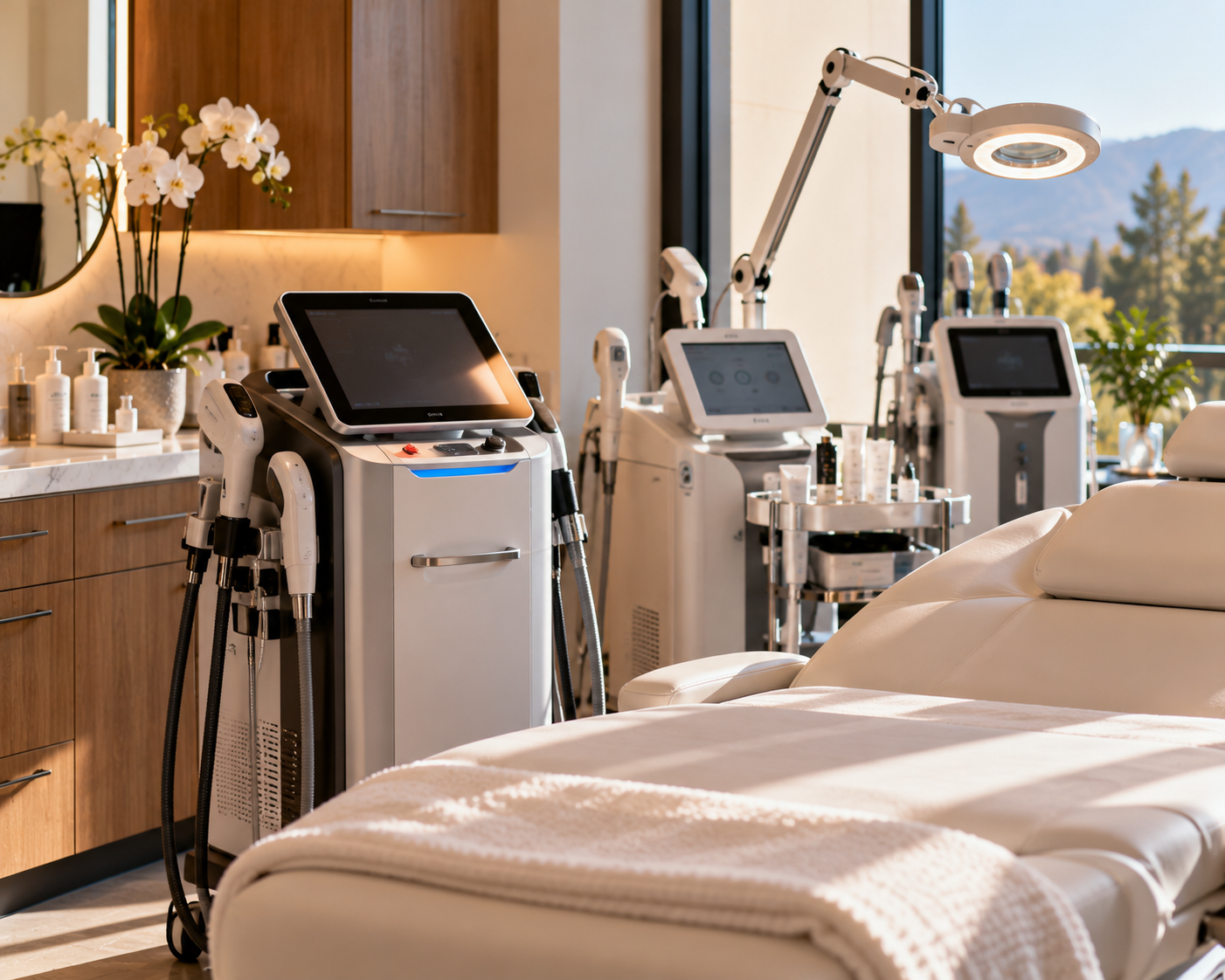
Medical spas have several insurance options for their equipment: standard commercial property coverage, equipment breakdown policies, inland marine coverage, and captive insurance programs. Each covers a different slice of the risk — and most commercial approaches leave meaningful gaps, particularly around mechanical failure and lost revenue during downtime. A captive insurance program is the most comprehensive solution, consolidating all equipment-related exposures into a single, actuary-priced, tax-advantaged structure that builds financial value for the practice owner rather than transferring it to a carrier.
Why Med Spa Equipment Insurance Is More Complex Than It Looks
Med spa equipment represents some of the most valuable and revenue-critical assets a practice owns. A single laser platform can cost $100,000 to $500,000 or more. When that equipment fails, the financial impact runs in two directions at once: the cost to repair or replace the device, and the lost revenue while it sits idle. For a practice generating significant income from a single device, the downtime loss can easily exceed the repair cost.
Standard commercial property insurance covers named perils — fire, theft, certain water damage — but typically excludes mechanical and electrical breakdown, which is the most common way expensive med spa equipment fails. Equipment breakdown coverage fills that specific gap, but it is a separate policy with its own terms and sublimits, and it usually doesn’t address revenue loss during downtime. Inland marine policies cover equipment in transit or off-premises but are not a substitute for comprehensive equipment protection.
Every med spa is already self-insuring the gaps between these policies — absorbing equipment losses, deductibles, and revenue shortfalls informally. A captive insurance program formalizes all of that retained risk in a single, legitimate, actuary-priced structure. A well-designed captive is a licensed insurance company — not a tax shelter — and the tax and financial advantages it provides flow from the integrity of the structure. Over time it builds real value: underwriting profit when equipment holds up, investment income earned on reserves, and compounding equity that belongs to the practice owner.
Key Points
• Commercial property insurance: Covers named perils such as fire, theft, and certain water damage, but typically excludes mechanical and electrical breakdown — the most common cause of high-value med spa equipment failure.
• Equipment breakdown coverage: A separate policy or endorsement covering mechanical and electrical failure. Essential for practices with laser platforms and other high-value technology, but often written with sublimits and doesn’t cover revenue loss.
• Inland marine / equipment floater: Covers equipment in transit or temporarily off-premises. Relevant for multi-location practices or those transporting devices, but not a substitute for on-premises equipment protection.
• Business interruption: Replaces lost revenue when equipment failure forces appointment cancellations. Frequently underinsured or excluded from standard policies without the right endorsements — and the most financially damaging gap for revenue-dependent practices.
• Captive insurance: Consolidates property, equipment breakdown, and business interruption into a single, actuary-priced, tax-advantaged program — eliminating the gap-and-overlap problem of multiple separate policies and building financial value for the owner.
Does standard commercial property insurance cover med spa lasers?
Standard commercial property covers named perils but typically excludes mechanical and electrical breakdown — the most common failure mode for laser equipment. Practices relying on property insurance alone for their equipment are very likely underinsured for their most probable loss scenario.
What is equipment breakdown coverage and does a med spa need it?
Equipment breakdown coverage — sometimes called boiler and machinery coverage — covers repair or replacement costs when equipment fails due to mechanical or electrical causes. For med spas with laser platforms, body contouring devices, and other high-value technology, it is an essential but frequently overlooked coverage. It should be reviewed carefully for sublimits relative to the actual replacement cost of the equipment.
How does business interruption apply to equipment failure at a med spa?
When revenue-generating equipment breaks down and appointments must be cancelled, business interruption coverage replaces the lost income during the repair or replacement period. Standard business interruption policies may not cover equipment-specific downtime without the right endorsements — and the revenue impact of losing a key device for weeks or months can be severe.
Can a captive cover all med spa equipment risks in one program?
Yes. A well-designed captive consolidates property damage, equipment breakdown, and business interruption into a single, coordinated program — priced on the practice’s own loss experience rather than broad market assumptions. When the equipment holds up, the underwriting profit stays with the practice. The captive manager handles the regulatory, actuarial, and administrative responsibilities.
Common Misconceptions
“Our commercial property policy covers our equipment.”
Standard commercial property policies cover named perils but exclude mechanical and electrical breakdown — typically the most common and costly way med spa equipment fails. Without a separate equipment breakdown policy, a practice absorbing a laser failure is paying entirely out of pocket for the repair or replacement.
“Equipment breakdown coverage is enough.”
Equipment breakdown covers repair or replacement costs but typically doesn’t address lost revenue during downtime. For a med spa generating $30,000 to $50,000 a month from a single device, the income loss during a six-week repair can dwarf the equipment cost itself. A captive can cover both in a single coordinated program.
“Service contracts replace the need for insurance.”
Service contracts and extended warranties cover scheduled maintenance and certain repairs, but they are not insurance. They don’t cover accidental damage, theft, or revenue loss, and they carry no regulatory oversight, capital requirements, or tax advantages. A captive insurance program addresses the full scope of equipment risk in a formally structured, compliant way.
Quick Summary
• Med spa equipment faces three distinct risks — physical damage, mechanical breakdown, and revenue loss from downtime — each requiring separate coverage under standard commercial programs, leaving most practices with meaningful gaps.
• Standard commercial property excludes mechanical and electrical breakdown; equipment breakdown coverage addresses that gap but typically misses revenue loss — coverages that are either unavailable or too expensive as standalone policies in the traditional market.
• A captive consolidates all equipment-related coverages into one actuary-priced, tax-advantaged program — eliminating coverage gaps and retaining the financial benefit when equipment holds up well.
Reserves are invested and earn returns, underwriting profit stays with the practice, and equity compounds over time — building a real financial asset alongside the practice rather than transferring wealth to a commercial carrier.
Discover Tailored Insurance Solutions
Unlock the potential of customized captive insurance designed specifically for your unique business needs.