
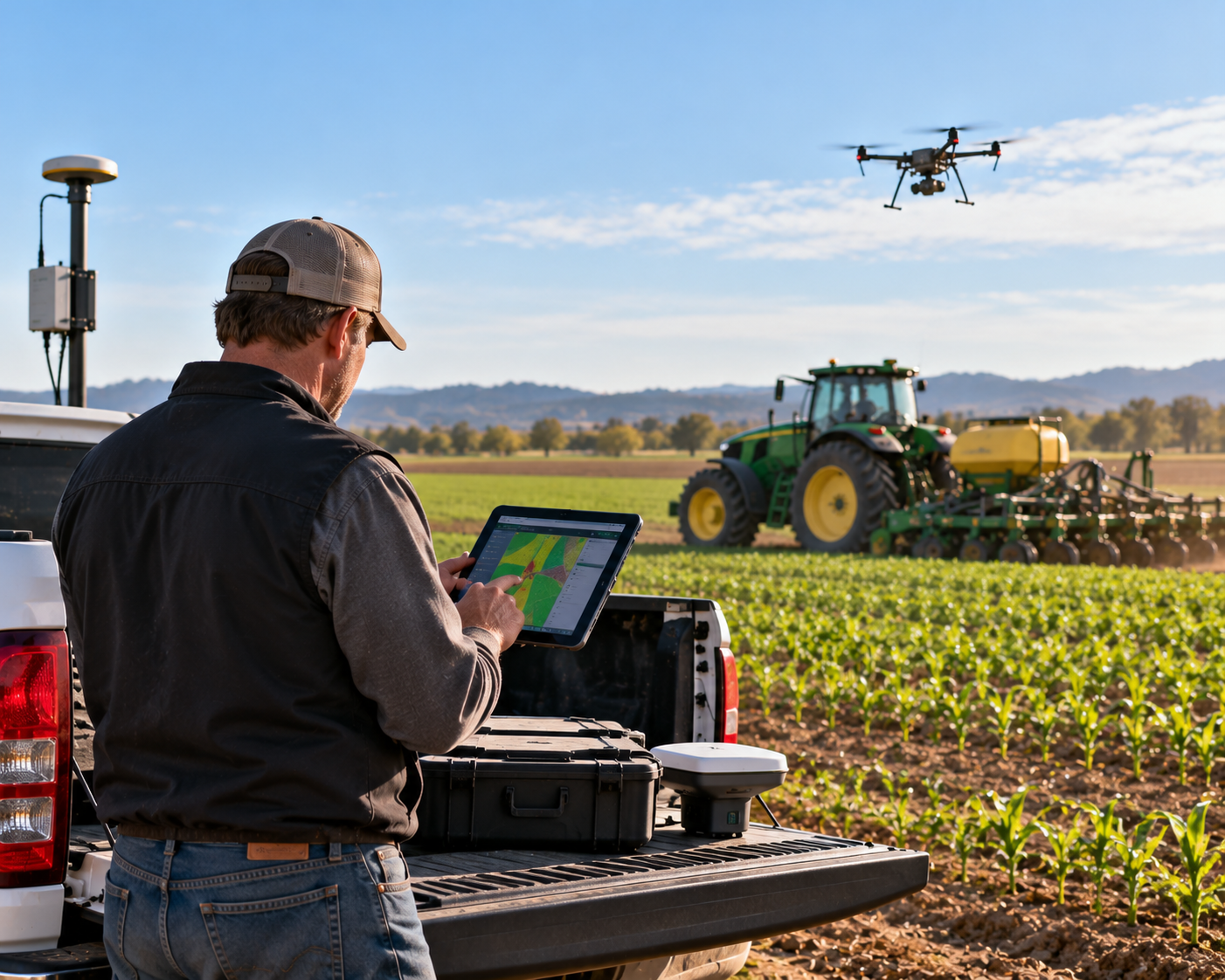
Probably not as well as you think. Standard farm insurance policies were designed for traditional operations — physical equipment, crop losses, and conventional liability exposures. Precision agriculture introduces a new layer of technology-driven risk: GPS-guided and automated equipment, drones, agronomic data platforms, variable rate application systems, and connected sensors. Most commercial farm policies have not kept pace with these exposures, leaving meaningful gaps in equipment valuation, technology failure, data loss, cyber liability, and drone operations that operators often don’t discover until after a loss.
Where Standard Policies Fall Short for Precision Agriculture
Precision agriculture equipment — GPS receivers, auto-steer systems, yield monitors, variable rate controllers, and the software that ties them together — represents a substantial investment that standard farm equipment schedules frequently undervalue. Replacement cost for precision components often exceeds the scheduled value on older policies, and the technology components embedded in modern machinery are frequently treated as incidental rather than separately valued. When a precision system is damaged or destroyed, the payout under a standard policy may not come close to covering actual replacement.
Technology failure is a distinct exposure that standard policies rarely address. If an automated application system malfunctions and over-applies herbicide, under-applies fertilizer, or applies inputs to the wrong field zone, the resulting crop damage may not be covered. Commercial farm policies typically cover named perils — hail, fire, theft — not losses that trace back to a failed sensor, a software error, or a GPS signal disruption. The gap between what the policy covers and what precision ag actually produces as a loss event can be substantial.
Agronomic data is another underrecognized exposure. Precision agriculture operations accumulate years of proprietary data: detailed soil maps, multi-season yield records, application histories, and field-level analytics that inform planting and management decisions. That data has real economic value — and commercial farm policies almost never cover data loss, corruption, or theft. Similarly, the farm management software platforms and connected systems that precision operations depend on create cyber liability exposure that standard policies do not address.
Drone operations add yet another layer. Agricultural drones used for scouting, spraying, or mapping may require separate commercial UAS coverage not included in a standard farm policy, and liability arising from drone operations — collision with another aircraft, damage to a neighboring property, or a spraying accident — may be explicitly excluded.
Every precision agriculture operator is already self-insuring these gaps — absorbing technology failure losses, data losses, and uninsured equipment shortfalls out of operating cash flow. A captive formalizes that retained risk in a legitimate, licensed insurance company with actuary-priced policies. It can be structured to cover the specific technology-driven exposures the commercial market either excludes or has not yet priced well. Premiums paid into the captive are invested and earn returns year after year, underwriting profit accumulates when losses stay below premiums, and equity compounds over time — building a genuine financial asset from risk the operator was absorbing anyway without benefit.
Key Points
• Equipment undervaluation: Precision ag components — auto-steer systems, GPS receivers, yield monitors, embedded controllers — are frequently undervalued or unscheduled in standard farm equipment riders. Replacement cost at loss time often exceeds coverage.
• Technology failure is not a named peril: Crop damage or input waste caused by sensor failure, software error, or GPS disruption is typically not covered under standard farm policies, which are built around weather events and physical perils rather than technology-driven loss events.
• Data and cyber exposure: Years of proprietary agronomic data — soil maps, yield histories, application records — have real economic value that commercial policies almost never cover. Connected farm systems also create cyber liability exposure that standard policies do not address.
• Drone operations: Agricultural drone use for scouting, mapping, or application typically requires separate UAS coverage not included in standard farm policies. Liability from drone incidents may be explicitly excluded.
• A captive fills the gaps: A well-designed captive can cover technology-driven exposures that are either unavailable or too expensive in the traditional market, while building underwriting profit, investment income, and compounding equity for the operator.
Does farm insurance cover drone damage or drone liability?
Standard farm policies typically do not cover agricultural drones or the liability that can arise from their operation. Commercial UAS coverage is generally required separately, and even then the scope of coverage varies significantly. Liability for drone collisions, spray drift, or damage to neighboring property may be excluded from both the farm policy and an add-on UAS endorsement, depending on how the policy is written. Operators using drones for commercial agricultural purposes should review their coverage carefully.
What happens if my GPS or automated system fails and causes crop damage?
In most cases, a standard farm policy will not cover crop damage caused by technology failure. Named-peril policies cover specific physical events — hail, fire, freeze — not losses that trace back to a malfunctioning sensor or a GPS signal error. Some equipment warranties or service contracts may offer limited recovery, but those are not insurance and typically do not cover the full economic loss from a failed application or planting pass. This is precisely the kind of exposure a captive can be structured to address.
Is the data my precision agriculture system collects covered by insurance?
Almost certainly not under a standard farm policy. Agronomic data — multi-year soil maps, yield records, application histories, and field analytics — has real and growing economic value, but commercial farm policies are designed around physical property losses. Data loss, corruption, or theft falls outside their coverage framework. A captive can be structured to cover data-related losses as part of a broader technology risk program tailored to the specific operation.
Can a captive cover precision agriculture technology risks?
Yes. A captive is well suited for technology-driven agricultural risks because it can be structured around the operator’s specific exposure profile rather than constrained to the named perils a commercial carrier is willing to write. Equipment valuation, technology failure, data loss, cyber liability, and drone operations can all be addressed within a captive structure. These tasks and responsibilities are typically managed by the captive manager in coordination with the operator’s risk and legal advisors. Operators generating approximately $300,000 or more in annual premium spend are typically strong candidates for a feasibility study.
Common Misconceptions
“My farm equipment rider covers my precision ag systems.”
Standard equipment riders are typically scheduled at values set when the policy was written, and often do not reflect the replacement cost of precision components or the embedded technology in modern machinery. More importantly, equipment coverage addresses physical damage — it does not address losses caused by technology failure, data corruption, or software errors. The gap between what the equipment rider pays and what a precision ag loss actually costs can be significant and this is something a captive can address very well.
“Data isn’t really an insurable asset.”
Precision agriculture data has quantifiable economic value. Multi-year soil maps and yield records inform input decisions, financing, land valuation, and sale negotiations. Losing that data has a real cost — reconstruction cost, lost decision quality, competitive disadvantage — that is no different in kind from losing physical equipment. The commercial market has simply not built products that reflect this reality. A captive structured around the operator’s actual exposure profile can.
“Our operation isn’t large enough for a captive.”
Precision agriculture operations that have invested heavily in technology, accumulate proprietary data, and operate connected equipment often carry more retained risk than a traditional farm of comparable acreage — because the commercial market hasn’t kept pace with what they actually face. A well-designed captive is a legitimate insurance company with actuary-priced policies, not a large-enterprise-only solution. Operators generating sufficient premium spend are strong candidates for a feasibility study, and the conversation about whether a captive makes sense is worth having earlier than most precision agriculture operators assume.
Quick Summary
• Standard farm policies were built around physical perils and traditional equipment — not the technology-driven exposures that precision agriculture introduces: equipment undervaluation, technology failure, data loss, cyber liability, and drone operations.
• Precision agriculture operators are already self-insuring these gaps, absorbing technology-driven losses out of operating cash flow without any of the financial benefits a captive would provide.
• A captive can be structured to cover risks that are either unavailable or too expensive in the traditional market — including technology failure, data loss, and drone liability — as part of a legitimate, actuary-priced insurance program.
• Underwriting profit when losses stay low, investment income earned on reserves, and compounding equity over time — a captive turns the retained risk that precision agriculture operators are already absorbing into a growing financial asset.
3F Captive Services offers agricultural operations an analysis of options and a free needs analysis to explore whether forming a captive is a tactic for the farm to consider.
Discover Tailored Insurance Solutions
Unlock the potential of customized captive insurance designed specifically for your unique business needs.