
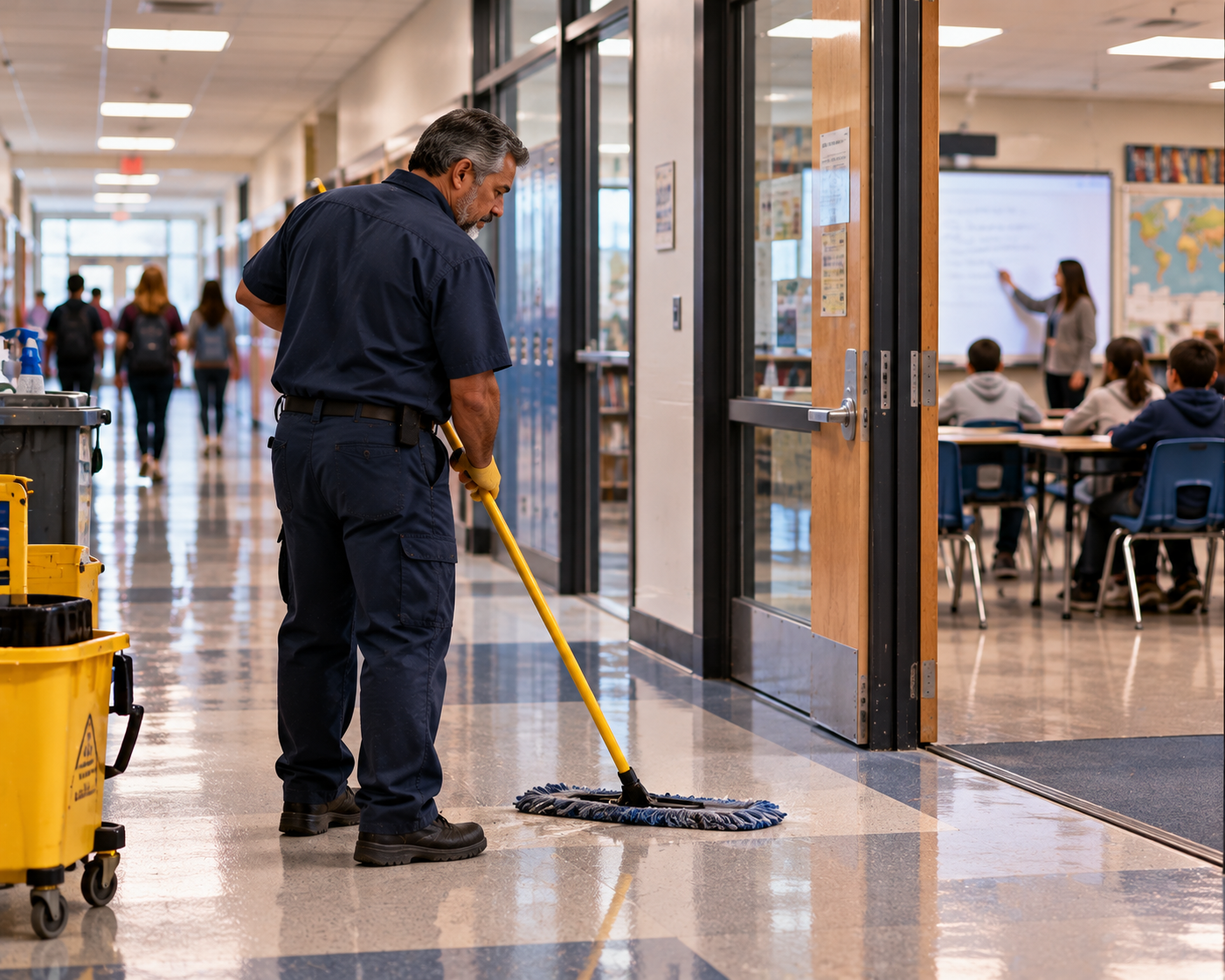
Yes — but most school districts are not structured to capture the full financial benefit of their own safety performance. Workers’ compensation is one of the largest and most controllable insurance costs a school district carries, yet many districts are either in commercial programs or joint powers authority risk pools that dilute the reward for strong loss experience. A captive insurance structure gives a district direct financial control over its workers’ comp costs — so that the underwriting profit generated by a safe, well-managed workforce stays with the district rather than subsidizing other members of a pool.
Why Most Districts Leave Money on the Table
School districts employ large, diverse workforces with meaningfully different risk profiles across job classifications. Teachers and administrators face different exposures than bus drivers, custodians, food service workers, grounds maintenance staff, and paraprofessionals. Across all of these classifications, workers’ comp claims tend to cluster around specific, manageable categories: slip and fall incidents, repetitive motion and ergonomic injuries, transportation-related injuries, and physical handling injuries in maintenance and custodial roles. Mental health and stress-related claims have grown as an additional category in recent years. None of these are unforeseeable or unmanageable — they are the predictable output of known working conditions, and disciplined safety programs can measurably reduce their frequency and severity.
The problem for most districts is that the structure through which they fund workers’ comp does not reward that discipline directly. Commercial programs pool risk across broad groups and retain the underwriting profit regardless of individual account performance. Joint powers authority risk pools — widely used among school districts and other public entities — are an improvement over the commercial market in many respects, but they face the same fundamental limitation: a district with strong safety performance and low losses is partially subsidizing the claims generated by districts with weaker programs. The underwriting profit from the well-run district’s low loss experience does not flow back to that district — it offsets losses elsewhere in the pool.
A captive breaks that dynamic. When a school district insures its workers’ comp through a captive, premiums are paid into a licensed insurance company the district controls. When losses stay below those premiums — because the safety program is working, injuries are prevented, and claims are managed well — the underwriting profit belongs to the district, not a pool or a commercial carrier. The financial incentive to invest in safety is direct and measurable: every claim prevented is a dollar that stays in the captive.
Every school district is already self-insuring a portion of its workers’ comp exposure through deductibles, retained layers, and administrative costs that fall below the commercial or pool threshold. A captive formalizes that retained risk in a legitimate, licensed insurance company with actuary-priced policies. Reserves held in the captive are invested and earn returns year after year — exactly the way commercial carriers profit from policyholder premiums before claims are paid. Equity compounds over time into a genuine financial asset that belongs to the district. Whether a district’s path to a captive runs through a single-parent structure, a group captive with other public entities, or a protected cell arrangement is a question of feasibility — determined by the district’s premium spend, loss history, and regulatory environment. These tasks and responsibilities are typically managed by the captive manager in coordination with the district’s risk and legal advisors.
Key Points
• Workers’ comp is highly controllable for school districts: Claim frequency in schools clusters around known, manageable categories — slip and fall, ergonomic injuries, transportation, and physical handling. Disciplined safety programs measurably reduce both frequency and severity, and a captive makes that reduction directly profitable for the district.
• Risk pools dilute the reward for good performance: JPAs and risk pools serve many districts well, but a well-run district with low losses is partially subsidizing weaker members. The underwriting profit from strong safety performance stays in the pool rather than returning to the district that earned it.
• A captive makes safety performance directly profitable: Every claim prevented flows directly to the district’s captive as underwriting profit. The financial incentive for safety investment is immediate and unambiguous — not diluted through a pool or shared with a commercial carrier.
• Structure follows feasibility: Single-parent captive, group captive with other public entities, or protected cell — the right structure is an outcome of a feasibility study, not a prerequisite. Districts generating sufficient premium spend are strong candidates regardless of which structure ultimately fits best.
• Three streams of financial return: Underwriting profit when claims stay below premiums, investment income earned on reserves, and compounding equity over time — a captive turns workers’ comp from a cost center into a financial asset the district owns and controls.
What workers’ comp options do school districts have?
School districts typically have several options for funding workers’ compensation, subject to state law: commercial insurance, participation in a joint powers authority or risk pool with other public entities, self-insurance (for larger districts that meet state self-insurance qualification requirements), or captive insurance. Each approach has different implications for cost control, financial flexibility, and the degree to which the district’s own loss experience drives its costs. A captive offers the most direct connection between safety performance and financial outcome.
How do school district risk pools work, and what are their limitations?
Joint powers authorities and risk pools allow school districts to pool their workers’ comp risk with other public entities, often achieving better terms than individual districts could obtain commercially. Member assessments are typically based on payroll and individual loss experience, so districts do receive some credit for good performance. The limitation is that it remains a pooling mechanism — losses generated by other members affect the pool’s financial position, and the underwriting profit from any one district’s strong safety record does not flow back to that district. Well-run districts with consistently low losses subsidize the pool rather than capturing the full value of their performance.
What types of workers’ comp claims are most common in school districts?
Workers’ comp claims in school districts tend to concentrate in identifiable categories: slip, trip, and fall incidents across classroom and campus environments; repetitive motion and ergonomic injuries, particularly among teachers and office staff; transportation-related injuries for bus drivers and aides; physical handling and lifting injuries in custodial, food service, and maintenance roles; and, increasingly, mental health and stress-related claims among teaching staff. The concentrated, predictable nature of these claim categories means that targeted safety programs can have a measurable and direct impact on loss experience — and in a captive, that impact translates directly into financial return for the district.
Can a public school district use captive insurance for workers’ comp?
In most jurisdictions, yes — public entities including school districts can participate in captive insurance structures, subject to state law requirements governing both workers’ compensation funding and captive formation. The regulatory landscape for public entity captives varies by state, and a feasibility study should include a review of the applicable requirements. Districts generating sufficient annual premium spend are strong candidates, and the captive manager handles the technical and regulatory aspects of establishing and operating the structure.
Common Misconceptions
“We’re in a JPA, so we’re already getting the benefit of our good safety record.”
JPAs typically do give credit for individual district loss experience through experience rating or modified assessment formulas. But a district’s performance is still evaluated within a pooling context — meaning losses generated by other members affect the pool’s overall financial position, and the full underwriting profit from a district’s strong safety record does not return to that district. A consistently low-loss district in a JPA is still partially subsidizing the pool. In a captive, that same performance generates underwriting profit that belongs entirely to the district.
“Workers’ comp is required by state law — we don’t have options for how it’s structured.”
The obligation to provide workers’ compensation coverage is set by state law — but how that obligation is funded is a separate question with multiple answers. Commercial insurance, risk pool participation, self-insurance, and captive insurance are all mechanisms for meeting the same statutory requirement. The question is not whether to provide coverage, but which structure puts the district in the best financial position given its own loss experience and premium spend.
“A captive is a private sector tool — it doesn’t apply to public entities like school districts.”
Public entities — including school districts, municipalities, and other governmental bodies — use captive insurance structures in many jurisdictions. A well-designed captive is a legitimate insurance company with actuary-priced policies, not a private sector workaround. The regulatory requirements for public entity captives vary by state, and a feasibility study will identify the applicable rules and optimal structure. For districts carrying meaningful workers’ comp premium spend and strong safety records, the captive conversation is exactly as relevant as it is for any private employer.
Quick Summary
• Workers’ comp is one of the most controllable insurance costs a school district carries — claim categories are predictable, safety programs measurably reduce frequency and severity, and a captive makes every improvement directly profitable for the district.
• Commercial programs and risk pools dilute the reward for good safety performance. A district with low losses subsidizes weaker performers rather than capturing the underwriting profit its own safety culture generated.
• A captive formalizes the district’s retained risk in a legitimate, actuary-priced structure — covering risks that are either unavailable or too expensive in the traditional market, and building financial value from premium spend that currently leaves the district entirely.
Underwriting profit when claims are low, investment income on reserves, and compounding equity over time — a captive turns workers’ comp from a line-item cost into a financial asset the district owns.
Discover Tailored Insurance Solutions
Unlock the potential of customized captive insurance designed specifically for your unique business needs.