
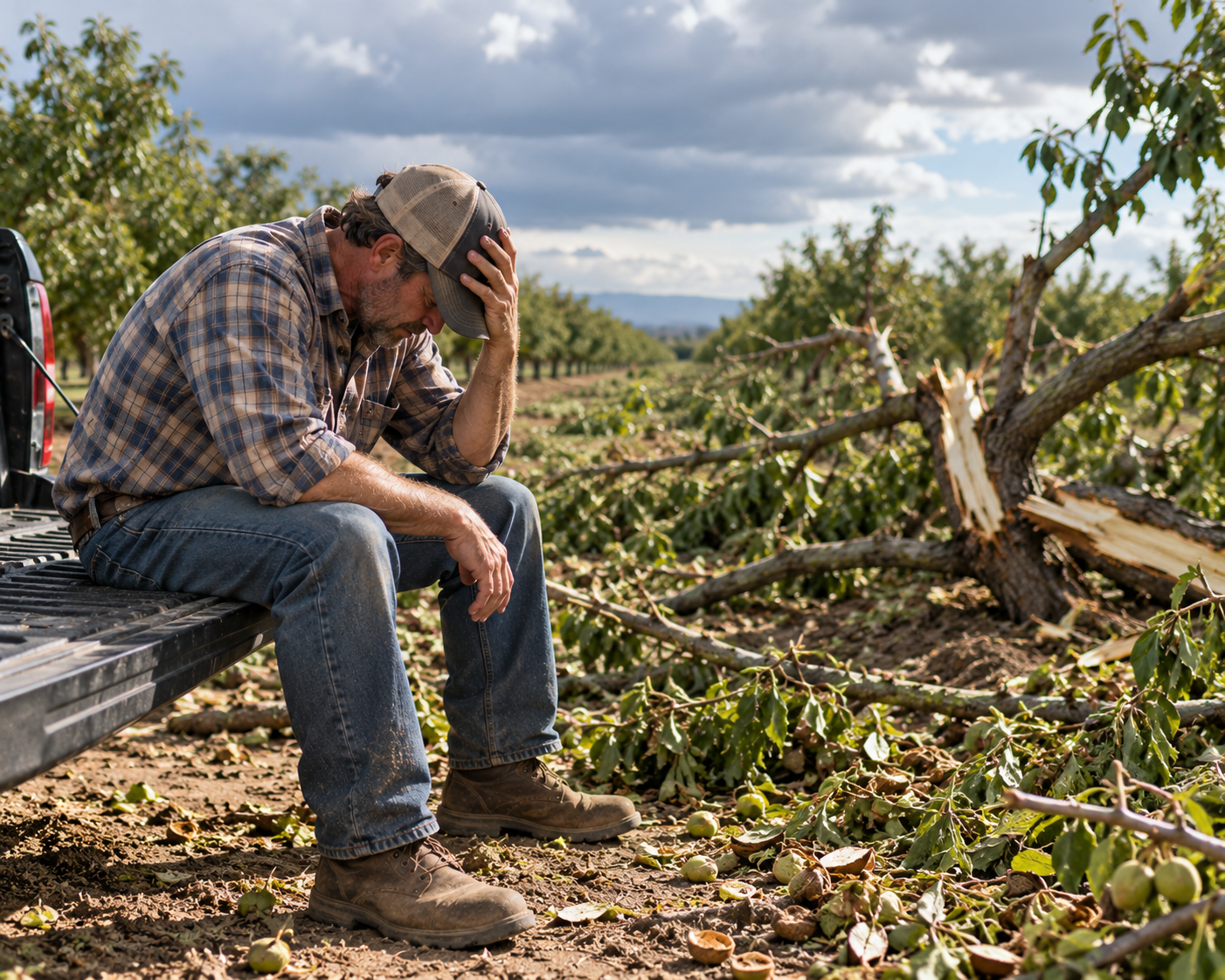
Yes — and the gaps tend to surface at the worst possible time, after a loss has already occurred. Standard farm insurance policies are built around a traditional model of agricultural operations: crops, livestock, buildings, and equipment exposed to weather, fire, and physical damage. Modern farming operations have outgrown that framework in several important ways. Precision agriculture technology, agritourism activities, custom farming services, stored grain, environmental liability, and employment practices exposure each represent categories where standard farm policies routinely leave meaningful coverage gaps that most farmers — and some agents — never think to examine.
The Most Common Coverage Gaps on Modern Farm Operations
Agritourism is one of the most frequently uninsured activities on American farms. Corn mazes, pumpkin patches, farm stands, pick-your-own operations, farm dinners, and event hosting have become meaningful revenue sources for many operations — and they bring the public onto the property in ways that standard farm liability policies were not designed to cover. Many farm policies either exclude agritourism activities entirely or limit liability coverage to the agricultural operation itself, treating paying visitors as outside the policy’s scope. A single serious injury to a visitor can generate liability that exceeds what the farm policy will pay if agritourism is not specifically addressed.
Custom farming operations — where a farmer or farm manager provides services such as custom harvesting, spraying, tillage, or grain hauling for other landowners — are typically not covered under a standard farm policy as a commercial service activity. Farm liability covers the operation of the farmer’s own farm; when that equipment is used for hire on another person’s land, it is treated as a commercial operation requiring separate commercial general liability and commercial auto coverage. The consequences of this gap are not abstract. A farm manager performing custom spray applications on land they do not own who applies the wrong chemical can destroy crops, orchards, or mature timber — and find after the fact that neither their own policy nor the property owner’s policy covers the loss. The damage is simply uninsured. What makes this gap particularly dangerous is that most custom farming operators genuinely believe their coverage extends to work they perform for others. That assumption is nearly universal — and it is nearly always wrong. Even well-established agricultural insurance agencies with decades of farm-specific experience often find it difficult or impossible to place adequate coverage for custom farming liability once a farmer actually attempts to buy it. The coverage is far harder to find than operators expect. Farmers doing custom work regularly are carrying uninsured commercial exposure on every job, whether they know it or not.
Equipment breakdown coverage is frequently confused with equipment physical damage coverage, but they address entirely different loss events. Physical damage coverage on farm machinery covers losses from collision, fire, theft, and other physical perils. Equipment breakdown coverage — sometimes called mechanical breakdown or boiler and machinery coverage — covers sudden and accidental mechanical or electrical failure of the equipment itself. A combine that catches fire is a physical damage claim. A combine whose engine seizes during harvest due to a mechanical failure is an equipment breakdown claim. Many farm policies do not include equipment breakdown coverage as a standard element, and the distinction is not always obvious to policyholders.
Environmental liability is a significant and largely uninsured exposure for many farming operations. Pesticide and herbicide drift onto neighboring property, fertilizer runoff into waterways, fuel spills from storage tanks, and chemical releases from on-farm storage each create environmental liability that standard farm policies either exclude entirely or cover at sub-limits inadequate for a serious incident. Environmental cleanup and remediation costs, third-party property damage from pesticide drift, and regulatory response costs from an environmental release can generate losses that dwarf the value of the crop that was being protected. Farmers rarely carry dedicated environmental liability coverage and are often unaware of the exposure.
Employment practices liability is another gap that catches farm operations off guard. Farms with significant labor forces — particularly those employing seasonal or migrant workers — carry real exposure for wrongful termination, discrimination, harassment, and wage-and-hour claims. Employment practices liability insurance is standard in most commercial industries but is rarely carried by farm operations, many of which assume the exposure is too small to warrant coverage or that it simply doesn’t apply to agricultural employment. It does apply, and claims in agricultural employment settings are not uncommon.
Every farming operation is already self-insuring these gaps — absorbing agritourism liability, custom farming exposure, equipment breakdown losses, environmental claims, and employment practices costs out of operating funds when they occur. A captive formalizes that retained risk in a legitimate, licensed insurance company with actuary-priced policies. It can be structured to cover the specific gaps the commercial market either excludes or has not built adequate products for, while building underwriting profit, investment income, and compounding equity for the operation over time. These tasks and responsibilities are typically managed by the captive manager in coordination with the farm’s legal and risk advisors.
Key Points
• Agritourism is frequently uninsured: Farm policies typically cover agricultural operations, not public-facing commercial activities. Paying visitors, events, and pick-your-own operations may fall outside standard farm liability coverage entirely unless specifically endorsed.
• Custom farming creates commercial exposure: Farmers who provide custom services for hire — harvesting, spraying, hauling — on other properties are operating commercially. Standard farm policies cover the farm’s own operations, not commercial services rendered to others.
• Equipment breakdown is not equipment damage: Physical damage coverage covers fire, collision, and physical perils. Mechanical and electrical failure is a separate coverage category that many farm policies do not include. A breakdown during harvest can generate significant losses that fall outside the standard policy.
• Environmental liability is largely uninsured on farms: Pesticide drift, fertilizer runoff, fuel spills, and chemical releases generate environmental liability that standard farm policies exclude or sublimit. Cleanup costs, third-party property damage, and regulatory response costs can be substantial.
• Employment practices exposure applies to farm labor: Wrongful termination, discrimination, harassment, and wage-and-hour claims arise in agricultural employment settings. Most farm operations do not carry employment practices liability insurance and are unaware of the exposure.
• A captive addresses the gaps the commercial market leaves: A captive can be structured to cover the specific risks that standard farm policies exclude or under-address — building underwriting profit, investment income, and compounding equity for the operation from risk it was already absorbing informally.
What does standard farm insurance typically not cover?
Standard farm policies are designed around traditional agricultural operations and named physical perils. Common exclusions or coverage gaps include: agritourism and public-facing activities, custom farming services provided for hire, equipment mechanical breakdown (as distinct from physical damage), environmental liability from pesticide drift or chemical releases, employment practices claims, precision agriculture technology failure and data loss, and business income losses beyond narrow policy parameters. The specific coverage available depends on the policy form and endorsements, but most standard farm policies leave at least some of these categories inadequately addressed.
Is agritourism covered by farm insurance?
Not automatically, and often not at all under a standard farm policy. Agritourism activities — corn mazes, farm stands, pick-your-own operations, farm dinners, and events — bring paying members of the public onto agricultural property in ways that standard farm liability policies were not designed to cover. Some carriers offer agritourism endorsements; others exclude the activity entirely or limit coverage in ways that would not adequately protect the operation in a serious incident. Farms with agritourism revenue should verify explicitly whether those activities are covered under the current policy and at what limits.
Does farm insurance cover custom farming operations?
Standard farm policies cover the operation of the insured’s own farm — not commercial services rendered to others for compensation. When a farmer uses their equipment to harvest, spray, or till for a neighboring operation for hire, they are providing a commercial service that falls outside the farm policy’s scope. Commercial general liability and commercial auto coverage are both potentially implicated. The critical risk is errors-and-omissions-type liability: a spray contractor who applies the wrong chemical and damages or destroys crops, trees, or other property on a third party’s land has created a significant liability that the farm policy almost certainly will not cover. Obtaining coverage specifically designed for custom farming liability is harder than most operators assume — even agents with long experience in agricultural insurance often struggle to place it. Farmers who perform custom work regularly should address this gap directly rather than assuming it is already handled.
Can a captive cover farm insurance gaps?
Yes. A captive is particularly well suited to addressing farm insurance gaps because it can be structured around the specific risks of the operation rather than constrained to what a commercial carrier will write at scale. Agritourism liability, custom farming commercial exposure, environmental liability above standard policy sublimits, employment practices, equipment breakdown, and other gaps the standard policy leaves behind can all be addressed within a captive program. Farming operations generating approximately $300,000 or more in annual premium spend across all lines are typically strong candidates for a feasibility study.
Common Misconceptions
“My farm policy covers everything that happens on my operation.”
Standard farm policies cover the specific risks the carrier was willing to underwrite at the premium charged — not the full range of activities a modern farm operation actually conducts. The gap between what a farmer believes is covered and what the policy actually addresses is often significant and only becomes clear after a loss. Agritourism, custom work, environmental liability, and employment practices are among the most common categories where that gap is largest.
“My agent would have told me if I had a coverage gap.”
Farm insurance agents are knowledgeable about the standard farm policy framework, but the standard framework does not cover everything — and agents cannot always place coverage for gaps even when they are aware of them. Custom farming liability is a documented example: agencies with substantial farm-specific experience regularly find that adequate coverage for errors in custom spray or application work is difficult or impossible to obtain in the standard market. An agent who cannot find the coverage cannot sell it, and a farmer who does not think to ask will not know to look. Relying on the assumption that a trusted agent would have raised the issue is not a substitute for a direct review of the farm’s actual activities against the specific terms of the policy.
“We’re too small for a captive to make sense for our gaps.”
The gaps exist regardless of farm size — a serious agritourism injury, an environmental release, or an employment claim does not scale proportionally to the farm’s acreage. The question is whether the farm’s total premium spend across all lines justifies formalizing the retained risk in a captive structure. For farms generating sufficient combined premium spend, a captive is a legitimate insurance company with actuary-priced policies that covers what the commercial market won’t — and builds financial value from risk the operation was already absorbing at no benefit.
Quick Summary
• Standard farm policies were designed for traditional operations and leave meaningful gaps in coverage for agritourism, custom farming services, equipment mechanical breakdown, environmental liability, and employment practices — areas where modern farm operations commonly have real exposure.
• Most farmers discover these gaps only after a loss. A review of actual farm activities against the specific terms of the policy — not the policy summary — is the only reliable way to understand where coverage ends.
• Every farm is already self-insuring these gaps, absorbing losses out of operating funds when they occur. A captive formalizes that retained risk in a legitimate, actuary-priced structure and covers risks that are either unavailable or too expensive in the traditional market.
• Underwriting profit when losses stay below premiums, investment income on reserves, and compounding equity over time — a captive turns the self-insured gaps that farm operations already carry into a growing financial asset.
Discover Tailored Insurance Solutions
Unlock the potential of customized captive insurance designed specifically for your unique business needs.